Wadi al-Qura
Wadi al-Qura (AlUla) is a historical region in northwestern Medina in Saudi Arabia, located on the trade route from Syria to Yemen. In ancient times, this area was inhabited by the people of Ad and Thamud, and in early Islam, it was a Jewish settlement. Wadi al-Qura witnessed important events such as the Battle of Wadi al-Qura and the passage of the Prophet (PBUH) during the Battle of Tabuk. Imam Ali (AS) also had endowments in this region. Today, AlUla, with its historical attractions like Madain Saleh (a UNESCO World Heritage site), has become one of Saudi Arabia's significant cultural tourism destinations.
Name and Location
Wadi al-Qura, now known as Wadi AlUla,[1] is a long valley 300 km northwest of Medina on the trade route from Syria to Hejaz.[2] To the south of this region lies Khaybar, and due to its numerous interconnected villages, it became known as "Wadi al-Qura" (Valley of Villages).[3] This region, with an area of approximately 2391 square kilometers, had a population of 60,103 in 2022 CE and plays an important role in the development of Saudi tourism as an ancient oasis city.[4]
Ancient Times
In ancient times, Wadi al-Qura was the home of the peoples of Ad and Thamud. The important center of this region was "Qurh," where it is said the people of Ad perished.[5] Al-Maqdisi reported in the fourth century AH that after Mecca, there was no more prosperous place in all of Hejaz than the city of Qurh.[6]

The historical city of "Al-Hijr" or "Madain Saleh" 22 km north of AlUla is another area in this wadi[7] which is said to have been the dwelling place of the people of Thamud[8] and is mentioned in the Quran.[9] This city is the first Saudi Arabian site inscribed on the UNESCO World Heritage list.[10] Some sources attribute the emergence of Prophet Salih's she-camel from the mountain to this very region.[11]
Wadi al-Qura in Early Islam
After the peoples of Ad and Thamud, Jews settled in this region and cultivated its lands. Then some Arab tribes such as Quda'a, Juhaynah, Udhra, and Baliy settled there. In early Islam, Wadi al-Qura was one of the important Jewish centers in Hejaz, and the Battle of Wadi al-Qura took place in this region.[12]
Battle of Wadi al-Qura
One of the most important historical events in Wadi al-Qura was the Battle of Wadi al-Qura in Jumada al-Thani of the seventh Hijri year. The Holy Prophet (PBUH), after conquering Khaybar, headed to Wadi al-Qura and invited the Jews residing there to Islam. After the Jews refused to accept Islam, a battle ensued, and eventually, the Jews surrendered. The Prophet (PBUH) took their possessions as spoils; however, he left their lands and palm trees to them so that they would cooperate with the Muslims as tribute-payers.[13]
Prophet's Passage through Wadi al-Qura
The Prophet of Islam (PBUH) passed through this region during the Battle of Tabuk and prayed there.[14] It is reported that the Banu Urayd Jews brought a food called "Harisa" to the Prophet (PBUH) during this journey, and he ate from it.[15]
Endowments of Imam Ali (AS) in Wadi al-Qura
Imam Ali (AS) had numerous properties and endowments in Wadi al-Qura, which he dedicated for the sake of God.[16] Among these endowments was a spring called "Well of the She-Camel" in the Birah region of Wadi al-Qura.[17]
According to historical reports, these endowments were subject to claims and disputes in later periods and were eventually restored to their endowed purpose.[18] According to a narration from Imam Ali (AS), all properties located in the Wadi al-Qura region belonged to the children of Fatima (SA), and its slaves would also be endowed.[19]
In the Works of Muslim Geographers
Ibn al-Kalbi, a historian (d. 204 AH), considered Wadi al-Qura the most prosperous region in the Arabian Peninsula,[20] and Muhammad al-Himyari in the ninth century AH described it as having many palm groves and springs, where the descendants of Ja'far ibn Abi Talib (known as al-Wadiyyin) resided.[21]
See Also
Images
-
 Modern AlUla city
 -
 Tourist attractions of Wadi al-Qura region
 -
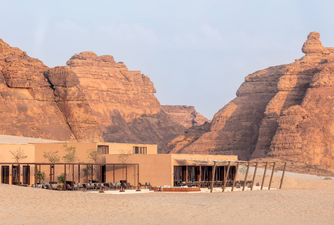 Tourist attractions of Wadi al-Qura region
 -
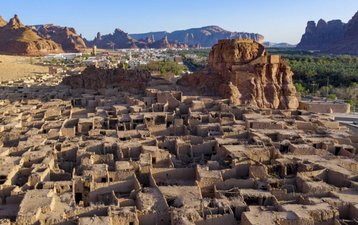 Historical and old area


Footnotes
- ↑ Al-Ma'alim al-Athir, p. 224.
- ↑ See: Hejaz in Early Islam, p. 83.
- ↑ Marasid al-Ittila', vol. 3, p. 1087.
- ↑ Official website Saudi News
- ↑ Mu'jam al-Buldan, vol. 4, p. 321.
- ↑ Ahsan al-Taqasim, pp. 83 and 84.
- ↑ Al-Ma'alim al-Athir, p. 97.
- ↑ Mu'jam al-Buldan, vol. 2, p. 221; Marasid al-Ittila', vol. 1, p. 381; Tarikh Ibn Khaldun, vol. 2, p. 24.
- ↑ Surah Al-A'raf, verse 74.
- ↑ Official UNESCO website [1]
- ↑ Mu'jam al-Buldan, vol. 2, p. 221.
- ↑ Hejaz in Early Islam, p. 84.
- ↑ Al-Maghazi, vol. 2, pp. 709-711.
- ↑ Hejaz in Early Islam, p. 83.
- ↑ Al-Maghazi, vol. 2, p. 2006.
- ↑ Al-Rawd al-Nadir, vol. 4, p. 123; Nahj al-Sa'adah, vol. 2, p. 217.
- ↑ Tarikh al-Madinah al-Munawwarah, vol. 1, p. 223.
- ↑ Tarikh al-Madinah al-Munawwarah, vol. 1, pp. 223 and 224.
- ↑ Furu' al-Kafi, vol. 7, p. 49.
- ↑ Mu'jam al-Buldan, vol. 4, p. 338.
- ↑ Al-Rawd al-Mi'tar, p. 602.
References
- Ahsan al-Taqasim fi Ma'rifat al-Aqalim, Maqdisi Abu Abdullah Muhammad ibn Ahmad (d. 380 AH), Beirut, Dar Sader, undated.
- Atlas Amakin Makkah al-Mukarramah wa Madinah al-Munawwarah, Deputy for Education and Research of the Office of the Supreme Leader, unknown place, unknown publisher, undated.
- Imta' al-Asma' bima lil-Nabi min al-Ahwal wa al-Amwal wa al-Hafadah wa al-Mata, Maqrizi Ahmad ibn Ali (d. 845 AH), edited by Muhammad Abd al-Hamid al-Nimisi, Beirut, Dar al-Kutub al-Ilmiyah, 1420 AH.
- Ansab al-Ashraf, Baladhuri Ahmad ibn Yahya (d. 279 AH), edited by Suhayl Zakkar and Riyad Zirikli, Beirut, Dar al-Fikr, 1417 AH.
- Bihar al-Anwar, Allamah Majlisi (d. 1110 AH), Tehran, Islamiya Publications, undated.
- Tarikh Ibn Khaldun (Diwan al-Mubtada' wa al-Khabar...), Ibn Khaldun Abd al-Rahman (d. 808 AH), edited by Khalil Shahadah, Beirut, Dar al-Fikr, 1408 AH.
- Tarikh al-Madinah al-Munawwarah, Ibn Shabbah Numayri Umar (d. 262 AH), edited by Fahim Muhammad Shaltut, Qom, Dar al-Fikr, 1410 AH.
- Al-Rawd al-Mi'tar fi Khabar al-Aqtar, Himyari Muhammad ibn Abd al-Mun'im (d. 900 AH), edited by Ihsan Abbas, Beirut, Maktabat Lubnan, 1984 CE.
- Al-Rawd al-Nadir, Zayd ibn Ali (?), commentary and editing by Husayn Siyaghi, Beirut, Dar al-Jil, undated.
- Futuh al-Buldan, Baladhuri Ahmad ibn Yahya (d. 279 AH), Beirut, Dar wa Maktabat al-Hilal, 1988 CE.
- Furu' al-Kafi, Kulayni Muhammad ibn Ya'qub (d. 329 AH), edited by Muhammad Husayn Rahimian, Qom, Nashr Quds, 1388 SH.
- Al-Maghazi, Waqidi Muhammad ibn Umar (d. 207 AH), edited by Marsden Jones, Beirut, Mu'assasat al-A'lami, 1409 AH.
- Marasid al-Ittila' ala Asma' al-Amkinah wa al-Biqa, Ibn Abd al-Haqq Abd al-Mu'min ibn Abd al-Haqq (d. 739 AH), edited by Ali Muhammad al-Bajawi, Beirut, Dar al-Jil, 1412 AH.
- Marasid al-Ittila' ala Asma' al-Amkinah wa al-Biqa, Sharab Muhammad Muhammad Hasan (15th century AH), Beirut, Dar al-Shamiyah, 1411 AH.
- Makarim al-Akhlaq, Tabarsi Hasan ibn Fadl (6th century AH), translated by Ahmad Ahmadzadeh, Qom, Nur al-Zahra, 1390 SH.
- Mu'jam al-Buldan, Yaqut Hamawi (d. 626 AH), Beirut, Dar Sader, 1995 CE.
- Nahj al-Sa'adah fi Mustadrak Nahj al-Balaghah, Mahmudi Muhammad Baqir (d. 1427 AH), Tehran, Ministry of Culture, 1418 AH.
- Hejaz dar Sadr Islam, Ali Salih Ahmad, translated by Abd al-Muhammad Ayati, Tehran, Mash'ar, 1375 SH.