
User:Pourghorbani: Difference between revisions
Pourghorbani (talk | contribs) No edit summary |
Pourghorbani (talk | contribs) No edit summary |
||
| Line 1: | Line 1: | ||
'''Askar Mosque''' was one of the historical mosques of [[Medina]], located to the east of [[the cemetery of the martyrs of Uhud]]. Its name is most likely due to the Islamic army (Askar) having prayed at this location on the eve of the Battle of Uhud. According to reports, [[Hazrat Hamza]] was martyred in the vicinity of this mosque, and [[Prophet Muhammad (s)|the Prophet (s)]] also prayed there and supplicated for the martyrs. | |||
Over the course of history, this mosque underwent multiple destructions and reconstructions, and ultimately, in 1405 AH (1985 CE), it was completely demolished, and the [[Hamza Mosque]] was built in its place with a new structure. | |||
Over the course of history, this mosque underwent multiple destructions and reconstructions, and ultimately, in 1405 AH (1985 CE), it was completely demolished, and the Hamza Mosque was built in its place with a new structure. | ==Name and Location== | ||
Name and Location | The Askar Mosque was located to the east of the cemetery of the martyrs of Uhud, and no specific reason has been recorded for the name "Askar".<ref>Samhūdī," Wafāʾ al-wafā bi akhbār dar al-Muṣṭafā", vol. 3, p. 207-208; al-ʿAyāshī, “Al-Madīna bayn al-Māḍī wa al-Ḥāḍir”, p. 536.</ref> | ||
The Askar Mosque was located to the east of the cemetery of the martyrs of Uhud, and no specific reason has been recorded for the name "Askar. | |||
According to some researchers, the name "Askar" | According to some researchers, the name "Askar" is due to the Islamic army having prayed in this area on the eve of the Battle of Uhud.<ref>Samhūdī," Wafāʾ al-wafā bi akhbār dar al-Muṣṭafā", vol. 3, p. 206.</ref> | ||
The mosque was 409 meters from Mount Uhud and 3,710 meters from the Prophet's Mosque | The mosque was 409 meters from Mount Uhud and 3,710 meters from the Prophet's Mosque.<ref>Kaʿkī, “Maʿālim al-Madīna al-Munawwara bayn al-ʿImāra wa al-Tārīkh. Medina”, vol. 2,p. 372.</ref> ʿ | ||
==background== | |||
Martyrdom of Hazrat Hamza | ===Martyrdom of Hazrat Hamza=== | ||
According to some reports, after Hazrat Hamza was struck in the midst of the Battle of Uhud, he fell from his horse in the vicinity of this mosque and was martyred. | According to some reports, after Hazrat Hamza was struck in the midst of the Battle of Uhud, he fell from his horse in the vicinity of this mosque and was martyred.<ref>Samhūdī," Wafāʾ al-wafā bi akhbār dar al-Muṣṭafā", vol. 3, p. 207-208.</ref> | ||
The Prophet ( | ===The Prophet (s) in the vicinity of the mosque=== | ||
Contemporary researchers, based on an old report, believe that the Prophet Muhammad ( | Contemporary researchers, based on an old report, believe that the Prophet Muhammad (s) likely prayed in the vicinity of this mosque along with the Islamic army on the eve of the Battle of Uhud.<ref> Kaʿkī, “Maʿālim al-Madīna al-Munawwara bayn al-ʿImāra wa al-Tārīkh. Medina”, vol. 2,p. 368; Samhūdī," Wafāʾ al-wafā bi akhbār dar al-Muṣṭafā", vol. 3, p. 206.</ref> ʿ | ||
According to some reports, after the Battle of Uhud, the Prophet ( | According to some reports, after the Battle of Uhud, the Prophet(s) prayed at the site of this mosque for Hazrat Hamza and the martyrs of Uhud, and eight years later, to keep their memory alive, he led a prayer for Hamza at this location.<ref>Kaʿkī, “Maʿālim al-Madīna al-Munawwara bayn al-ʿImāra wa al-Tārīkh. Medina”, vol. 2,p. 369-370; Samhūdī," Wafāʾ al-wafā bi akhbār dar al-Muṣṭafā", vol. 3, p. 206.</ref>(5) ʿ | ||
History | ==History of the building== | ||
By the 10th century AH, most of the mosque's structure had been destroyed, and in its remains, similarly carved stones were visible. | By the 10th century AH, most of the mosque's structure had been destroyed, and in its remains, similarly carved stones were visible.<ref>Samhūdī," Wafāʾ al-wafā bi akhbār dar al-Muṣṭafā", vol. 3, p. 207.</ref> | ||
During the Ottoman period (reign until 1327 AH / 1909 CE), the mosque was described as having a well-constructed building.<ref>ʿAyāshī, "Al-Madīna bayn al-Māḍī wa al-Ḥāḍir", p. 536.</ref> | |||
In 1405 AH / 1985 CE, the Askar Mosque was completely demolished.<ref>Kaʿkī, “Maʿālim al-Madīna al-Munawwara bayn al-ʿImāra wa al-Tārīkh. Medina”, vol. 2,p. 376.</ref> | |||
And the Hamza Mosque was built with a new structure on the site of the Askar Mosque.<ref>Kaʿkī, “Maʿālim al-Madīna al-Munawwara bayn al-ʿImāra wa al-Tārīkh. Medina”, vol. 2,p. 368.</ref> | |||
==Gallery== | |||
<gallery mode="packed" heights="150"> | |||
file:مسجد حمزه1.png|An old image of the Hamza Mosque before 1344 AH, showing a part of the Askar Mosque on its right side. | |||
file:مسجد حمزه 5.png|Image of the Askar Mosque, which was expanded in 1385 AH. | |||
</gallery> | |||
Related Topics | Related Topics | ||
Mosques of Medina | Mosques of Medina | ||
Revision as of 12:05, 13 December 2025
Askar Mosque was one of the historical mosques of Medina, located to the east of the cemetery of the martyrs of Uhud. Its name is most likely due to the Islamic army (Askar) having prayed at this location on the eve of the Battle of Uhud. According to reports, Hazrat Hamza was martyred in the vicinity of this mosque, and the Prophet (s) also prayed there and supplicated for the martyrs. Over the course of history, this mosque underwent multiple destructions and reconstructions, and ultimately, in 1405 AH (1985 CE), it was completely demolished, and the Hamza Mosque was built in its place with a new structure.
Name and Location
The Askar Mosque was located to the east of the cemetery of the martyrs of Uhud, and no specific reason has been recorded for the name "Askar".[1]
According to some researchers, the name "Askar" is due to the Islamic army having prayed in this area on the eve of the Battle of Uhud.[2]
The mosque was 409 meters from Mount Uhud and 3,710 meters from the Prophet's Mosque.[3] ʿ
background
Martyrdom of Hazrat Hamza
According to some reports, after Hazrat Hamza was struck in the midst of the Battle of Uhud, he fell from his horse in the vicinity of this mosque and was martyred.[4]
The Prophet (s) in the vicinity of the mosque
Contemporary researchers, based on an old report, believe that the Prophet Muhammad (s) likely prayed in the vicinity of this mosque along with the Islamic army on the eve of the Battle of Uhud.[5] ʿ
According to some reports, after the Battle of Uhud, the Prophet(s) prayed at the site of this mosque for Hazrat Hamza and the martyrs of Uhud, and eight years later, to keep their memory alive, he led a prayer for Hamza at this location.[6](5) ʿ
History of the building
By the 10th century AH, most of the mosque's structure had been destroyed, and in its remains, similarly carved stones were visible.[7]
During the Ottoman period (reign until 1327 AH / 1909 CE), the mosque was described as having a well-constructed building.[8] In 1405 AH / 1985 CE, the Askar Mosque was completely demolished.[9] And the Hamza Mosque was built with a new structure on the site of the Askar Mosque.[10]
Gallery
-
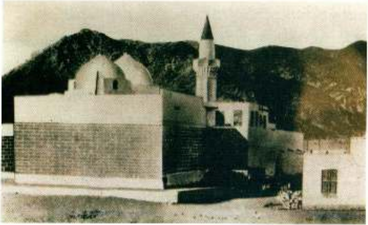 An old image of the Hamza Mosque before 1344 AH, showing a part of the Askar Mosque on its right side.
 -
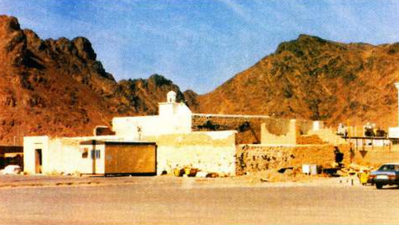 Image of the Askar Mosque, which was expanded in 1385 AH.


Related Topics Mosques of Medina
Cemetery of the Martyrs of Uhud Hamza ibn Abdul-Muttalib Mosque (Medina) Battle of Uhud References . ʿAbdulʿAzīz Kaʿkī. Maʿālim al-Madīna al-Munawwara bayn al-ʿImāra wa al-Tārīkh. Medina: Nāshir: Muʾallif, 2011 CE. .ʿAlī b. ʿAbdallāh al-Samhūdī. Wafāʾ al-Wafāʾ bi-Akhbār Dār al-Muṣṭafā. Beirut: Dār al-Kutub al-ʿIlmiyya, 2006 CE. . Sayyid Muḥsin Amīn. Kashf al-Irtiyāb fī ʾAtbāʿ Muḥammad b. ʿAbd al-Wahhāb. Qom: Maktabat al-Ḥaramayn, n.d. . Sayyid Ibrāhīm al-ʿAyāshī. Al-Madīna bayn al-Māḍī wa al-Ḥāḍir. Medina: Maktabat al-ʿIlmiyya, 1972 CE.
- ↑ Samhūdī," Wafāʾ al-wafā bi akhbār dar al-Muṣṭafā", vol. 3, p. 207-208; al-ʿAyāshī, “Al-Madīna bayn al-Māḍī wa al-Ḥāḍir”, p. 536.
- ↑ Samhūdī," Wafāʾ al-wafā bi akhbār dar al-Muṣṭafā", vol. 3, p. 206.
- ↑ Kaʿkī, “Maʿālim al-Madīna al-Munawwara bayn al-ʿImāra wa al-Tārīkh. Medina”, vol. 2,p. 372.
- ↑ Samhūdī," Wafāʾ al-wafā bi akhbār dar al-Muṣṭafā", vol. 3, p. 207-208.
- ↑ Kaʿkī, “Maʿālim al-Madīna al-Munawwara bayn al-ʿImāra wa al-Tārīkh. Medina”, vol. 2,p. 368; Samhūdī," Wafāʾ al-wafā bi akhbār dar al-Muṣṭafā", vol. 3, p. 206.
- ↑ Kaʿkī, “Maʿālim al-Madīna al-Munawwara bayn al-ʿImāra wa al-Tārīkh. Medina”, vol. 2,p. 369-370; Samhūdī," Wafāʾ al-wafā bi akhbār dar al-Muṣṭafā", vol. 3, p. 206.
- ↑ Samhūdī," Wafāʾ al-wafā bi akhbār dar al-Muṣṭafā", vol. 3, p. 207.
- ↑ ʿAyāshī, "Al-Madīna bayn al-Māḍī wa al-Ḥāḍir", p. 536.
- ↑ Kaʿkī, “Maʿālim al-Madīna al-Munawwara bayn al-ʿImāra wa al-Tārīkh. Medina”, vol. 2,p. 376.
- ↑ Kaʿkī, “Maʿālim al-Madīna al-Munawwara bayn al-ʿImāra wa al-Tārīkh. Medina”, vol. 2,p. 368.