
User:Pourghorbani: Difference between revisions
Pourghorbani (talk | contribs) No edit summary |
Pourghorbani (talk | contribs) No edit summary |
||
| Line 1: | Line 1: | ||
Masjid al-ʿUṣba (The Mosque of al-ʿUṣba)** | |||
Masjid al-ʿUṣba is an ancient mosque in [[Medina]], also known as Masjid al-Tawba (the Mosque of Repentance). It is located to the west of [[Masjid Quba]] in an area filled with farms and water wells. The structure of the mosque consists of a roofless square, approximately 11 meters in length and width, with stone walls about one meter high. It is reported that [[Prophet Muhammad (s)]] prayed within the vicinity of this mosque. | Masjid al-ʿUṣba is an ancient mosque in [[Medina]], also known as Masjid al-Tawba (the Mosque of Repentance). It is located to the west of [[Masjid Quba]] in an area filled with farms and water wells. The structure of the mosque consists of a roofless square, approximately 11 meters in length and width, with stone walls about one meter high. It is reported that [[Prophet Muhammad (s)]] prayed within the vicinity of this mosque. | ||
==Prayer of the Prophet (s)== | |||
Historical sources mention that [[Prophet Muhammad (s)]] prayed at Masjid al-Tawba in ʿUṣba, near the [[Well of Hujaym]].<ref name=":2">[https://wikihaj.com/index.php?title=پرونده%3Aالتعریف_بما_انست_الهجرة.pdf&page=217 Al-Taʿrīf bimā ansat al-hijra, al-Muṭrī, p. 217.]</ref> | Historical sources mention that [[Prophet Muhammad (s)]] prayed at Masjid al-Tawba in ʿUṣba, near the [[Well of Hujaym]].<ref name=":2">[https://wikihaj.com/index.php?title=پرونده%3Aالتعریف_بما_انست_الهجرة.pdf&page=217 Al-Taʿrīf bimā ansat al-hijra, al-Muṭrī, p. 217.]</ref> | ||
==Location and Name of the Mosque== | |||
Masjid al-ʿUṣba derives its name from its location in the village of ʿUṣba. ʿUṣba is an area to the west of [[Masjid Quba]]<ref name=":0">[https://wikihaj.com/index.php?title=پرونده%3Aمساجد_الاثریه.pdf&page=123 Masājid al-Athariyya, ʿAbd al-Ghanī, p. 123.]</ref> and was known for its farms and water wells.<ref name=":2" /> It was also referred to as the fortress or stronghold of ʿUṣba.<ref>Al-Maghānim al-Muṭāba fī Maʿālim Ṭāba, Fīrūzābādī, p. 265.</ref> This is the place where a group of migrants from Mecca stayed upon arriving in Quba before the arrival of the Prophet (s).<ref name=":1" /> | Masjid al-ʿUṣba derives its name from its location in the village of ʿUṣba. ʿUṣba is an area to the west of [[Masjid Quba]]<ref name=":0">[https://wikihaj.com/index.php?title=پرونده%3Aمساجد_الاثریه.pdf&page=123 Masājid al-Athariyya, ʿAbd al-Ghanī, p. 123.]</ref> and was known for its farms and water wells.<ref name=":2" /> It was also referred to as the fortress or stronghold of ʿUṣba.<ref>Al-Maghānim al-Muṭāba fī Maʿālim Ṭāba, Fīrūzābādī, p. 265.</ref> This is the place where a group of migrants from Mecca stayed upon arriving in Quba before the arrival of the Prophet (s).<ref name=":1" /> | ||
| Line 20: | Line 14: | ||
Reports from the 15th century AH/20th century CE indicate that the mosque was located in the garden of Ibrāhīm al-Turkī, which was called Bustān al-ʿUṣba.<ref name=":4" /> | Reports from the 15th century AH/20th century CE indicate that the mosque was located in the garden of Ibrāhīm al-Turkī, which was called Bustān al-ʿUṣba.<ref name=":4" /> | ||
==History== | |||
There is no precise information about the construction date of the mosque. Some speculate that it was built during the rule of [[ʿUmar ibn ʿAbd al-ʿAzīz]] over Medina.<ref>Maʿālim al-Madīna al-Munawwara bayn al-Māḍī wa al-Ḥāḍir, part 4, vol. 3, p. 228.</ref> There is no trace of this mosque in the 8th and 9th centuries AH, as noted by [[Muḥammad ibn Aḥmad al-Muṭrī]] (d. 741 AH) and [[ʿAlī ibn ʿAbd Allāh al-Samhūdī]] (d. 911 AH) in their discussions of mosques that are no longer known.<ref name=":2" /><ref name=":3" /> Muḥammad Kabrīt al-Madanī (1012–1070 AH) also confirmed in the 11th century that there was no trace of this mosque.<ref>[https://wikihaj.com/index.php?title=پرونده%3Aالجواهر_الثمیة_فی_محاسن_المدینة.pdf&page=157 Al-Jawāhir al-Thamīna fī Maḥāsin al-Madīna, p. 157]</ref> Aḥmad al-ʿAbbāsī (d. 11th century AH) mentioned the remains of the mosque near the [[Well of Hujaym]].<ref>[https://wikihaj.com/index.php?title=پرونده:عمده_الاخبار_فی_مدینه_المختار.pdf&page=180 ʿUmdat al-Akhbār, p. 175]</ref> | There is no precise information about the construction date of the mosque. Some speculate that it was built during the rule of [[ʿUmar ibn ʿAbd al-ʿAzīz]] over Medina.<ref>Maʿālim al-Madīna al-Munawwara bayn al-Māḍī wa al-Ḥāḍir, part 4, vol. 3, p. 228.</ref> There is no trace of this mosque in the 8th and 9th centuries AH, as noted by [[Muḥammad ibn Aḥmad al-Muṭrī]] (d. 741 AH) and [[ʿAlī ibn ʿAbd Allāh al-Samhūdī]] (d. 911 AH) in their discussions of mosques that are no longer known.<ref name=":2" /><ref name=":3" /> Muḥammad Kabrīt al-Madanī (1012–1070 AH) also confirmed in the 11th century that there was no trace of this mosque.<ref>[https://wikihaj.com/index.php?title=پرونده%3Aالجواهر_الثمیة_فی_محاسن_المدینة.pdf&page=157 Al-Jawāhir al-Thamīna fī Maḥāsin al-Madīna, p. 157]</ref> Aḥmad al-ʿAbbāsī (d. 11th century AH) mentioned the remains of the mosque near the [[Well of Hujaym]].<ref>[https://wikihaj.com/index.php?title=پرونده:عمده_الاخبار_فی_مدینه_المختار.pdf&page=180 ʿUmdat al-Akhbār, p. 175]</ref> | ||
==The Current Structure== | |||
Today, the mosque consists of a roofless square, approximately 11 meters in length and width, with stone walls about one meter high, showing traces of whitewashing.<ref name=":1">[https://wikihaj.com/index.php?title=پرونده:مساجد_الاثریه.pdf&page=124 Masājid al-Athariyya, ʿAbd al-Ghanī, p. 124.]; Maʿālim al-Madīna al-Munawwara bayn al-Miʿmāra wa al-Tārīkh, part 4, vol. 3, pp. 229–230.</ref> | Today, the mosque consists of a roofless square, approximately 11 meters in length and width, with stone walls about one meter high, showing traces of whitewashing.<ref name=":1">[https://wikihaj.com/index.php?title=پرونده:مساجد_الاثریه.pdf&page=124 Masājid al-Athariyya, ʿAbd al-Ghanī, p. 124.]; Maʿālim al-Madīna al-Munawwara bayn al-Miʿmāra wa al-Tārīkh, part 4, vol. 3, pp. 229–230.</ref> | ||
==Historical Images of the Mosque== | |||
<gallery> | <gallery> | ||
File:یقغ.jpg|alt= | File:یقغ.jpg|alt= | ||
| Line 41: | Line 31: | ||
</gallery> | </gallery> | ||
==Images of the Mosque’s Current Condition== | |||
<gallery> | <gallery> | ||
File:2024-08-29 07 52 39-Google Maps.png|alt=|Renovation of the mosque’s walls | File:2024-08-29 07 52 39-Google Maps.png|alt=|Renovation of the mosque’s walls | ||
| Line 54: | Line 42: | ||
File:2024-08-29 07 52 09-Google Maps.png|alt= | File:2024-08-29 07 52 09-Google Maps.png|alt= | ||
</gallery> | </gallery> | ||
==Notes== | |||
{{Notes}} | |||
==References== | |||
{{References}} | |||
* Muḥammad Kabrīt al-Ḥusaynī al-Madanī. ''Al-Jawāhir al-Thamīna fī Maʿālim al-Madīna''. Dār al-Kutub al-ʿIlmiyya, 1997 CE. | |||
*Aḥmad ibn ʿAbd al-Ḥamīd al-ʿAbbāsī. ''ʿUmdat al-Akhbār fī Madīnat al-Mukhtār''. edited by Muḥammad Ṭayyib al-Anṣārī, published by Asʿad Ṭarābuzūnī, Cairo, n.d. | |||
* Fīrūzābādī, Muḥammad ibn Yaʿqūb, and Jāssir, Ḥamd. ''Al-Maghānim al-Muṭāba fī Maʿālim Ṭāba''. Riyadh - Saudi Arabia: Dār al-Yamāma lil-Baḥth wa al-Tarjama wa al-Nashr, 1389–1969. | |||
*Muḥammad Ilyās ʿAbd al-Ghanī. ''Masājid al-Athariyya''. Maṭābiʿ al-Rashīd, Medina, 2nd edition, 1419 AH. | |||
*Jamāl al-Dīn Muḥammad ibn Aḥmad al-Muṭrī. ''Al-Taʿrīf bimā ansat al-hijra min maʿālim dār al-hijra''. edited by Sulaymān al-Raḥīlī, Riyadh: Dārat al-Malik ʿAbd al-ʿAzīz, 1426 AH. | |||
*Ibrāhīm ibn ʿAlī al-ʿAyyāshī. ''Al-Madīna bayn al-Māḍī wa al-Ḥāḍir. 1972 CE. | |||
*ʿAbd al-ʿAzīz ibn ʿAbd al-Raḥmān Kaʿkī. ''Maʿālim al-Madīna al-Munawwara bayn al-Miʿmāra wa al-Tārīkh''. part 4, Beirut, 2011. | |||
*ʿAlī ibn ʿAbd Allāh al-Samhūdī. ''Wafāʾ al-Wafā bi-Akhbār Dār al-Muṣṭafā''. edited by Qāsim al-Sāmarrāʾī, London: Muʾassasat al-Furqān lil-Turāth al-Islāmī, 2001 CE. | |||
Revision as of 05:37, 2 February 2025
Masjid al-ʿUṣba (The Mosque of al-ʿUṣba)** Masjid al-ʿUṣba is an ancient mosque in Medina, also known as Masjid al-Tawba (the Mosque of Repentance). It is located to the west of Masjid Quba in an area filled with farms and water wells. The structure of the mosque consists of a roofless square, approximately 11 meters in length and width, with stone walls about one meter high. It is reported that Prophet Muhammad (s) prayed within the vicinity of this mosque.
Prayer of the Prophet (s)
Historical sources mention that Prophet Muhammad (s) prayed at Masjid al-Tawba in ʿUṣba, near the Well of Hujaym.[1]
Location and Name of the Mosque
Masjid al-ʿUṣba derives its name from its location in the village of ʿUṣba. ʿUṣba is an area to the west of Masjid Quba[2] and was known for its farms and water wells.[1] It was also referred to as the fortress or stronghold of ʿUṣba.[3] This is the place where a group of migrants from Mecca stayed upon arriving in Quba before the arrival of the Prophet (s).[4]
In geographical sources about Medina, the name Masjid al-ʿUṣba is not mentioned; however, Masjid al-Tawba in ʿUṣba, near the Well of Hujaym, is referenced.[1][5] ʿAlī ibn ʿAbd Allāh al-Samhūdī, a historian of Medina in the 8th century AH, explicitly stated that the reason for the name Masjid al-Tawba is unknown.[5] This area was inhabited by the Banī Jaḥjaba tribe, and for this reason, some have also called this mosque Masjid Banī Jaḥjaba.[6]
Some researchers of Medina’s history have identified this mosque with Masjid al-Nūr (the Mosque of Light), which was one of the mosques near Quba.[7] However, early sources do not equate these two mosques.[2]
Reports from the 15th century AH/20th century CE indicate that the mosque was located in the garden of Ibrāhīm al-Turkī, which was called Bustān al-ʿUṣba.[7]
History
There is no precise information about the construction date of the mosque. Some speculate that it was built during the rule of ʿUmar ibn ʿAbd al-ʿAzīz over Medina.[8] There is no trace of this mosque in the 8th and 9th centuries AH, as noted by Muḥammad ibn Aḥmad al-Muṭrī (d. 741 AH) and ʿAlī ibn ʿAbd Allāh al-Samhūdī (d. 911 AH) in their discussions of mosques that are no longer known.[1][5] Muḥammad Kabrīt al-Madanī (1012–1070 AH) also confirmed in the 11th century that there was no trace of this mosque.[9] Aḥmad al-ʿAbbāsī (d. 11th century AH) mentioned the remains of the mosque near the Well of Hujaym.[10]
The Current Structure
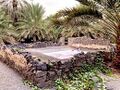
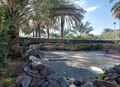
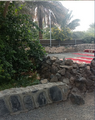
Today, the mosque consists of a roofless square, approximately 11 meters in length and width, with stone walls about one meter high, showing traces of whitewashing.[4]
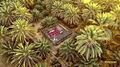
Historical Images of the Mosque
-
-

-
-

-

-

-
 Existence of a roofed area in 1413 AH/1993 CE


Images of the Mosque’s Current Condition
-
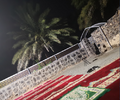 Renovation of the mosque’s walls
 -
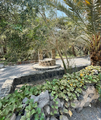
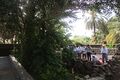 Changes in the surrounding environment
 -
-
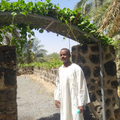 Reconstruction of the mosque’s entrance
 -
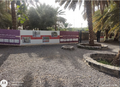 Construction of a perimeter wall around the mosque
 -
-
-


Notes
- ↑ 1.0 1.1 1.2 1.3 Al-Taʿrīf bimā ansat al-hijra, al-Muṭrī, p. 217.
- ↑ 2.0 2.1 Masājid al-Athariyya, ʿAbd al-Ghanī, p. 123.
- ↑ Al-Maghānim al-Muṭāba fī Maʿālim Ṭāba, Fīrūzābādī, p. 265.
- ↑ 4.0 4.1 Masājid al-Athariyya, ʿAbd al-Ghanī, p. 124.; Maʿālim al-Madīna al-Munawwara bayn al-Miʿmāra wa al-Tārīkh, part 4, vol. 3, pp. 229–230.
- ↑ 5.0 5.1 5.2 Wafāʾ al-Wafā, al-Samhūdī, vol. 3, p. 248.
- ↑ Maʿālim al-Madīna al-Munawwara bayn al-Māḍī wa al-Ḥāḍir, part 4, vol. 3, p. 228.
- ↑ 7.0 7.1 Tārīkh Maʿālim al-Madīna al-Munawwara Qadīman wa Ḥadīthan, p. 209; Al-Madīna bayn al-Māḍī wa al-Ḥāḍir, p. 302
- ↑ Maʿālim al-Madīna al-Munawwara bayn al-Māḍī wa al-Ḥāḍir, part 4, vol. 3, p. 228.
- ↑ Al-Jawāhir al-Thamīna fī Maḥāsin al-Madīna, p. 157
- ↑ ʿUmdat al-Akhbār, p. 175
References
- Muḥammad Kabrīt al-Ḥusaynī al-Madanī. Al-Jawāhir al-Thamīna fī Maʿālim al-Madīna. Dār al-Kutub al-ʿIlmiyya, 1997 CE.
- Aḥmad ibn ʿAbd al-Ḥamīd al-ʿAbbāsī. ʿUmdat al-Akhbār fī Madīnat al-Mukhtār. edited by Muḥammad Ṭayyib al-Anṣārī, published by Asʿad Ṭarābuzūnī, Cairo, n.d.
- Fīrūzābādī, Muḥammad ibn Yaʿqūb, and Jāssir, Ḥamd. Al-Maghānim al-Muṭāba fī Maʿālim Ṭāba. Riyadh - Saudi Arabia: Dār al-Yamāma lil-Baḥth wa al-Tarjama wa al-Nashr, 1389–1969.
- Muḥammad Ilyās ʿAbd al-Ghanī. Masājid al-Athariyya. Maṭābiʿ al-Rashīd, Medina, 2nd edition, 1419 AH.
- Jamāl al-Dīn Muḥammad ibn Aḥmad al-Muṭrī. Al-Taʿrīf bimā ansat al-hijra min maʿālim dār al-hijra. edited by Sulaymān al-Raḥīlī, Riyadh: Dārat al-Malik ʿAbd al-ʿAzīz, 1426 AH.
- Ibrāhīm ibn ʿAlī al-ʿAyyāshī. Al-Madīna bayn al-Māḍī wa al-Ḥāḍir. 1972 CE.
- ʿAbd al-ʿAzīz ibn ʿAbd al-Raḥmān Kaʿkī. Maʿālim al-Madīna al-Munawwara bayn al-Miʿmāra wa al-Tārīkh. part 4, Beirut, 2011.
- ʿAlī ibn ʿAbd Allāh al-Samhūdī. Wafāʾ al-Wafā bi-Akhbār Dār al-Muṣṭafā. edited by Qāsim al-Sāmarrāʾī, London: Muʾassasat al-Furqān lil-Turāth al-Islāmī, 2001 CE.