
User:Pourghorbani: Difference between revisions
Pourghorbani (talk | contribs) |
Pourghorbani (talk | contribs) |
||
| Line 18: | Line 18: | ||
With the rise of the Wahhabis in the Arabian Peninsula and Medina, the shrine of Ismail, like other tombs and shrines, was destroyed in the year 1344 AH. According to some later reports, a simple wall was built around the grave.<ref>Travelogue of Ḥājj Sayyid Muḥammad Fāṭimī, in Fourteen Other Hajj Travelogues from the Qajar Era, p. 996.</ref> It is said that his shrine was surrounded by walls without doors or windows, measuring three by three meters and two and a half meters in height, located outside the Baqīʿ Cemetery, about 15 meters from its wall, to the west and facing the graves of the Imams (a.s.).<ref>Tārīkh Ḥaram Aʾimmat al-Baqīʿ, pp. 289–290.</ref> | With the rise of the Wahhabis in the Arabian Peninsula and Medina, the shrine of Ismail, like other tombs and shrines, was destroyed in the year 1344 AH. According to some later reports, a simple wall was built around the grave.<ref>Travelogue of Ḥājj Sayyid Muḥammad Fāṭimī, in Fourteen Other Hajj Travelogues from the Qajar Era, p. 996.</ref> It is said that his shrine was surrounded by walls without doors or windows, measuring three by three meters and two and a half meters in height, located outside the Baqīʿ Cemetery, about 15 meters from its wall, to the west and facing the graves of the Imams (a.s.).<ref>Tārīkh Ḥaram Aʾimmat al-Baqīʿ, pp. 289–290.</ref> | ||
==Current Location | ==Current Location== | ||
In the year 1394 AH (1975 CE), during the construction of the western road of Baqīʿ, the area around the grave of Ismail was demolished, and rumors spread that his body was found intact.<ref>Tārīkh Ḥaram Aʾimmat al-Baqīʿ, p. 290.</ref> Some reports indicate that the body of Ismail ibn Jaʿfar (a) was moved inside the Baqīʿ Cemetery with the coordination of some Ismāʿīlī leaders<ref>Āthār Islāmī Makka wa Madīna, p. 348.</ref> and marked.<ref>Tārīkh Ḥaram Aʾimmat al-Baqīʿ, p. 290; Āthār Islāmī Makka wa Madīna, p. 348.</ref> The exact location of his burial is unclear due to differing descriptions and the loss of markers, but it is believed to be near the grave of [[Umm al-Banin]], near the graves of the [[Martyrs of Harra]], or about 10 meters from the grave of Halima al-Saʿdiyya at the end of Baqi.<ref>Tārīkh Ḥaram Aʾimmat al-Baqīʿ, p. 291.</ref> | In the year 1394 AH (1975 CE), during the construction of the western road of Baqīʿ, the area around the grave of Ismail was demolished, and rumors spread that his body was found intact.<ref>Tārīkh Ḥaram Aʾimmat al-Baqīʿ, p. 290.</ref> Some reports indicate that the body of Ismail ibn Jaʿfar (a) was moved inside the Baqīʿ Cemetery with the coordination of some Ismāʿīlī leaders<ref>Āthār Islāmī Makka wa Madīna, p. 348.</ref> and marked.<ref>Tārīkh Ḥaram Aʾimmat al-Baqīʿ, p. 290; Āthār Islāmī Makka wa Madīna, p. 348.</ref> The exact location of his burial is unclear due to differing descriptions and the loss of markers, but it is believed to be near the grave of [[Umm al-Banin]], near the graves of the [[Martyrs of Harra]], or about 10 meters from the grave of Halima al-Saʿdiyya at the end of Baqi.<ref>Tārīkh Ḥaram Aʾimmat al-Baqīʿ, p. 291.</ref> | ||
==Destruction of the Dome== | ==Destruction of the Dome== | ||
With the rise of the [[Wahhābī]] movement in the [[Arabian Peninsula]] and [[Medina]], the shrine of Ismāʿīl, like other mausoleums and domes, was demolished in 1344 AH. According to some later reports, a simple enclosure was constructed around the grave.<ref>Safar-nāma Makka, Ḥāj Sayyid Muḥammad Fāṭimī, in Fourteen Qājār-Era Hajj Travelogues, p. 996.</ref> It is said that the tomb was surrounded by plain walls without doors or windows, measuring 3x3 meters and 2.5 meters in height, located outside the [[Baqīʿ Cemetery]] at a distance of 15 meters west of its wall, directly opposite the graves of the Imāms (a).<ref>Tārīkh Ḥaram Aʾimmat al-Baqīʿ, pp. 289–290.</ref> | With the rise of the [[Wahhābī]] movement in the [[Arabian Peninsula]] and [[Medina]], the shrine of Ismāʿīl, like other mausoleums and domes, was demolished in 1344 AH. According to some later reports, a simple enclosure was constructed around the grave.<ref>Safar-nāma Makka, Ḥāj Sayyid Muḥammad Fāṭimī, in Fourteen Qājār-Era Hajj Travelogues, p. 996.</ref> It is said that the tomb was surrounded by plain walls without doors or windows, measuring 3x3 meters and 2.5 meters in height, located outside the [[Baqīʿ Cemetery]] at a distance of 15 meters west of its wall, directly opposite the graves of the Imāms (a).<ref>Tārīkh Ḥaram Aʾimmat al-Baqīʿ, pp. 289–290.</ref> | ||
Revision as of 15:33, 25 January 2025
The grave of Ismail b. Jafar (a) is the burial place of Ismail, the eldest son of Imam Jafar al-Sadiq (a), who passed away before his father. His body was buried in Medina, in the Baqi Cemetery. For centuries, this shrine had a structure and a dome and was a place of visitation for pilgrims. It is said that the shrine was built on land that was previously the house of Imam al-Sajjad (a), and in its courtyard, there was a well from which people would drink for the healing of the sick.
This shrine was destroyed in the year 1344 AH when the Wahhabis took control of Mecca and Medina. After this event, a simple wall was built around the grave until it was completely demolished during the construction of a road next to the cemetery. According to some reports, the body of Ismail was moved to another part of Baqi, near the grave of Umm al-Banin or near the graves of the Martyrs of Harra, or about 10 meters away from the grave of Halima al-Sadiyya.
Ismaill ibn Jafar
Ismail ibn Jafar was the eldest son of Imam Jafar ibn Muhammad al-Sadiq (a.s.), the sixth Imam of the Shia, who passed away during his father’s lifetime. His death is estimated to have occurred around the year 138 AH.[1] Some Shia during the lifetime of Imam al-Sadiq (a) believed that Ismail would be his successor. Some denied his death, while others believed in the Imamate of his son, Muhammad. Both groups came to be known as the Ismailis.[2]
Burial Place
According to historical sources, Ismail ibn Jafar passed away in Urayd (a village near Medina), but his body was brought to Medina and buried in the Baqiʿ Cemetery.[3] His grave was located in an area that became separated from the rest of Baqīʿ when the city walls were extended, placing his shrine inside the walls of Medina (adjacent to the city wall) while the rest of the cemetery remained outside.[4]
History of the Dome
The grave of Ismail ibn Jafar had a dome during certain periods of history. It is said that the dome and shrine were built during the rule of the Fatimids in Egypt (302–564 AH). A description from the 8th century AH indicates that at that time, the grave of Ismail was a shrine with a large white dome located west of the dome of ʿAbbas ibn ʿAbd al-Muttalib and adjacent to the wall of Medina. According to the same report, the shrine was built on land that was previously the house of Imam Zayn al-ʿAbidin (a), and at that time, there was an abandoned mosque and a well next to the shrine.[5]
Samhudi, a historian of Medina in the second half of the 9th century, mentions two inscriptions at the shrine of Ismail. These inscriptions indicated that the structure was built by Husayn ibn Abi al-Hayjaʾ (an envoy of the Fatimid government) in the year 546 AH, and the same individual had also endowed a garden located to the west of the shrine to Ismail’s mausoleum.[6]
Later travelogues also mention the shrine of Ismail ibn Jafar.[7] For example, Ayyashi, a travel writer from the Levant in the 11th century, reports that Shia pilgrims, many of whom were part of the Iraqi caravan, made a point to visit the grave of Ismail.[8] A report from the early 13th century AH also mentions a well in the courtyard of the shrine attributed to Imam Zayn al-Abidin (a.s.), from which water was taken for the healing of the sick.[9]
Destruction of the Dome
With the rise of the Wahhabis in the Arabian Peninsula and Medina, the shrine of Ismail, like other tombs and shrines, was destroyed in the year 1344 AH. According to some later reports, a simple wall was built around the grave.[10] It is said that his shrine was surrounded by walls without doors or windows, measuring three by three meters and two and a half meters in height, located outside the Baqīʿ Cemetery, about 15 meters from its wall, to the west and facing the graves of the Imams (a.s.).[11]
Current Location
In the year 1394 AH (1975 CE), during the construction of the western road of Baqīʿ, the area around the grave of Ismail was demolished, and rumors spread that his body was found intact.[12] Some reports indicate that the body of Ismail ibn Jaʿfar (a) was moved inside the Baqīʿ Cemetery with the coordination of some Ismāʿīlī leaders[13] and marked.[14] The exact location of his burial is unclear due to differing descriptions and the loss of markers, but it is believed to be near the grave of Umm al-Banin, near the graves of the Martyrs of Harra, or about 10 meters from the grave of Halima al-Saʿdiyya at the end of Baqi.[15]
Destruction of the Dome
With the rise of the Wahhābī movement in the Arabian Peninsula and Medina, the shrine of Ismāʿīl, like other mausoleums and domes, was demolished in 1344 AH. According to some later reports, a simple enclosure was constructed around the grave.[16] It is said that the tomb was surrounded by plain walls without doors or windows, measuring 3x3 meters and 2.5 meters in height, located outside the Baqīʿ Cemetery at a distance of 15 meters west of its wall, directly opposite the graves of the Imāms (a).[17]
Current Location
In 1394 AH (1975 CE), during the construction of a road west of the Baqīʿ Cemetery, the area around Ismāʿīl's grave was demolished, and it was rumored that his body was found intact.[18] Some reports indicate that the remains of Ismāʿīl ibn Jaʿfar (a) were relocated to the Baqīʿ Cemetery with the cooperation of some prominent Ismaili figures[19] and marked.[20] Due to differing descriptions and the loss of landmarks, the exact location of his grave remains uncertain. However, it is believed to be near the Grave of Umm al-Banīn, close to the Martyrs of Ḥarra, or approximately 10 meters from the Grave of Ḥalīmah al-Saʿdiyyah at the edge of Baqīʿ.[21]
gallery
-
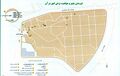 Approximate location of the grave of Ismail b. Jafar in Baqīʿ (marked as No. 8)
 -
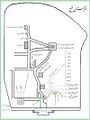 Map showing the location of Ismail ibn Jafar’s grave in Baqīʿ


Notes
- ↑ “The Shrine of Ismail ibn Jaʿfar in Baqi and Its Historical Context up to the Present Century,” p. 52.
- ↑ Al-Irshād, vol. 2, pp. 209–210.
- ↑ Al-Irshād, vol. 2, p. 209; Sirr al-Silsila al-ʿAlawiyya, p. 34; al-Majdī, p. 100.
- ↑ Wafāʾ al-Wafā, vol. 5, p. 117.
- ↑ Al-Taʿrīf bimā ansat al-hijra, p. 121.
- ↑ Wafāʾ al-Wafā, vol. 3, p. 306.
- ↑ See: “The Shrine of Ismāʿīl ibn Jaʿfar in Baqīʿ and Its Historical Context up to the Present Century,” pp. 56–59.
- ↑ Al-Riḥla al-ʿAyyāshiyya, vol. 1, p. 381.
- ↑ Ḥālāt al-Ḥaramayn, in Fifty Hajj Travelogues from the Qajar Era, p. 256.
- ↑ Travelogue of Ḥājj Sayyid Muḥammad Fāṭimī, in Fourteen Other Hajj Travelogues from the Qajar Era, p. 996.
- ↑ Tārīkh Ḥaram Aʾimmat al-Baqīʿ, pp. 289–290.
- ↑ Tārīkh Ḥaram Aʾimmat al-Baqīʿ, p. 290.
- ↑ Āthār Islāmī Makka wa Madīna, p. 348.
- ↑ Tārīkh Ḥaram Aʾimmat al-Baqīʿ, p. 290; Āthār Islāmī Makka wa Madīna, p. 348.
- ↑ Tārīkh Ḥaram Aʾimmat al-Baqīʿ, p. 291.
- ↑ Safar-nāma Makka, Ḥāj Sayyid Muḥammad Fāṭimī, in Fourteen Qājār-Era Hajj Travelogues, p. 996.
- ↑ Tārīkh Ḥaram Aʾimmat al-Baqīʿ, pp. 289–290.
- ↑ Tārīkh Ḥaram Aʾimmat al-Baqīʿ, p. 290.
- ↑ Āthār Islāmī Makka wa Madīna, p. 348.
- ↑ Tārīkh Ḥaram Aʾimmat al-Baqīʿ, p. 290; Āthār Islāmī Makka wa Madīna, p. 348.
- ↑ Tārīkh Ḥaram Aʾimmat al-Baqīʿ, p. 291.
References
- ʿAyyāshī, ʿAbd Allāh b. Muḥammad al-.Al-Riḥla al-ʿAyyāshiyya. Edited by Saʿīd al-Fāḍilī and Sulaymān al-Qarshī. Abu Dhabi: Dār al-Suwaydī lil-Nashr wa al-Tawzīʿ, 2006.
- Bukhārī, Muḥammad b. Ismāʿīl al-. Al-Adab al-mufrad. 3rd edition. Edited by Muḥammad Fuʾād ʿAbd al-Bāqī. Beirut: Dār al-Bashāʾir al-Islāmiya, 1409 AH.
- Jaʿfarīyān, Rasūl. Āthār Islāmī Makka wa Madīna. Tehran: Mashʿar, 1382 AH.
- Khamihyār, Aḥmad.** *Bahsht al-Baqīʿ*. Tehran: Andīsha-yi Mīrāth, 1401 AH.
- Mufīd, Shaykh al-.Al-Irshād fī maʿrifat ḥujaj Allāh ʿalā al-ʿibād. Edited by Muʾassasat Āl al-Bayt. Qom: Kongreh Shaykh Mufīd, 1413 AH.
- Muṭrī, Jamāl al-Dīn Muḥammad b. Aḥmad al-.Al-Taʿrīf bimā ansat al-hijra. Edited by Salmān al-Raḥīlī. Riyadh: Dār al-Malik ʿAbd al-ʿAzīz, 1426 AH.
- Najafī, Ḥāfiẓ.Buqʿat Ismāʿīl ibn Jaʿfar fī al-Baqīʿ wa basīṭuhā al-tārīkhī ilā al-qarn al-ḥāḍir.Mīqāt al-Ḥajj, no. 124, pp. 49–74.
- Najmī, Muḥammad Ṣādiq.Tārīkh ḥaram aʾimmat al-Baqīʿ wa āthār ukhrā fī Madīnat al-Munawwara. Tehran: Mashʿar, 1386 AH.
- Samhūdī, ʿAlī b. ʿAbd Allāh al-.Wafāʾ al-wafā bi-akhbār dār al-Muṣṭafā. Edited by Qāsim al-Sāmarrāʾī. London: Muʾassasat al-Furqān, 2006.