
| یا صَرِیخَ الْمَکْرُوبِینَ، وَیا مُجِیبَ دَعْوَةِ الْمُضْطَرِّینَ، وَیا مُغِیْثَ الْمَهْمُومِینَ، اِکْشِفْ عَنِّی ضُرِّی وَهَمِّی وَکَرْبِی وَغَمِّی، کَما کَشَفْتَ عَنْ نَبِیِّکَ صَلَّی اللهُ عَلَیْهِ وَآلِهِ هَمَّهُ، وَکَفَیْتَهُ هَوْلَ عَدُوِّهِ، وَاکْفِنِی ما اَهَمَّنِی مِنْ أَمْرِ الدُّنْیا وَالْاَخِرَةِ، یا أَرْحَمَ الرّاحِمِینَ. |
Al-Fath Mosque: Difference between revisions
No edit summary |
m Text replacement - "<gallery>" to "<gallery mode="packed" heights="150px">" |
||
| (4 intermediate revisions by the same user not shown) | |||
| Line 29: | Line 29: | ||
}} | }} | ||
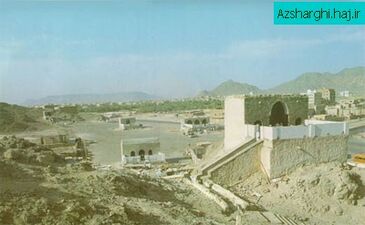
'''Al-Fath Mosque''' is one of the ancient mosques of [[Medina]]. The [[Prophet Muhammad (s)]] set up his command tent during the [[Battle of the Trench]] on a part of [[Mount Sela']], which is the location of this mosque, situated to the northwest of [[al-Masjid al-Nabawi]]. In this place, the Prophet (s) prayed. The mosque has existed since the first/seventh century, and until the second/eighth and third/ninth centuries, the spot where the Prophet (s) prayed was marked with a pillar inside the | '''Al-Fath Mosque''' is one of the ancient mosques of [[Medina]]. The [[Prophet Muhammad (s)]] set up his command tent during the [[Battle of the Trench]] on a part of [[Mount Sela']], which is the location of this mosque, situated to the northwest of [[al-Masjid al-Nabawi]]. In this place, the Prophet (s) prayed. The mosque has existed since the first/seventh century, and until the second/eighth and third/ninth centuries, the spot where the Prophet (s) prayed was marked with a pillar inside the mosque's courtyard. | ||
== Location == | == Location == | ||
Al-Fath Mosque is situated on a section of the western slope of [[Mount Sela']].<ref>[https://wikihaj.com/index.php?title= | Al-Fath Mosque is situated on a section of the western slope of [[Mount Sela']].<ref>[https://wikihaj.com/index.php?title=file%3Aمساجد_الاثریه.pdf&page=138 ''Al-Masājid al-atharīyya'', p. 138.]</ref> Fath is the name of the area where the group of [[al-Fath Mosques]] is located. The most famous of these mosques, positioned at the highest part of the slope, is al-Fath Mosque.<ref>[https://wikihaj.com/index.php?title=file%3Aتاریخ_معالم_المدینه_المنوره_قدیما_و_حدیثا.pdf&page=199 ''Tārīkh maʿālim al-Madīna al-munawwara qadīman wa ḥadīthan'', p. 199.]</ref> | ||
== Origin and Names == | == Origin and Names == | ||
The | The Prophet's command tent during the [[Battle of the Trench]] was located at the site of this mosque,<ref name=":1">[https://wikihaj.com/index.php?title=file%3Aمرآة_الحرمین_ج۳-۴.pdf&page=900 ''Mawsūʿat mirʾāt al-Ḥaramayn al-sharīfayn wa Jazīrat al-ʿArab'', vol. 4, p. 900.]</ref> and thus it came to be known as al-Ahzāb Mosque. It was here that the Prophet prayed to God to defeat the “Ahzab.”<ref>''Ṣaḥīḥ al-Bukhārī'', vol. 3, p. 234.</ref><ref name=":0" /> The Prophet prayed for three days, and on Wednesday, after the supplication was answered, signs of joy appeared on his face.<ref>''al-Istidhkār'', vol. 2, p. 534.</ref> The spot where the Prophet (s) prayed was marked with a pillar in the mosque's courtyard during the second/eighth and third/ninth centuries.<ref>[https://wikihaj.com/index.php?title=file:تاریخ_مدینه_ابن_شبه.pdf&page=60 ''Tārīkh al-Madīna al-munawwara'', p. 60.]; [https://wikihaj.com/index.php?title=file:اخبار_المدینه_ابن_زباله.pdf&page=142 ''Akhbār al-Madīna'', p. 142.]</ref> | ||
It is narrated that the Prophet (s) gave Muslims the glad tidings of victory at this place, hence it was called al-Fath Mosque. Others believe the mosque was named “Fath” because Sura al-Fath was revealed there.<ref>'' | It is narrated that the Prophet (s) gave Muslims the glad tidings of victory at this place, hence it was called al-Fath Mosque. Others believe the mosque was named “Fath” because Sura al-Fath was revealed there.<ref>''Maʿālim al-Madīna al-munawwara bayn al-ʿimāra wa-l-tārīkh'', part 4, vol. 4, p. 84.</ref> The name “al-A'lā” has also been given to the mosque, referring to its elevated location on the slopes of Mount Sela'.<ref name=":0">[https://wikihaj.com/index.php?title=file:مساجد_الاثریه.pdf&page=139 ''Al-Masājid al-atharīyya'', p. 139.]</ref> | ||
=== | === Prophet's Prayer in al-Fath Mosque === | ||
The Prophet (s) performed the afternoon prayer in the area of al-Fath Mosque.<ref name=":2">[https://wikihaj.com/index.php?title= | The Prophet (s) performed the afternoon prayer in the area of al-Fath Mosque.<ref name=":2">[https://wikihaj.com/index.php?title=file%3Aتاریخ_مدینه_ابن_شبه.pdf&page=59 ''Tārīkh al-Madīna al-munawwara'', p. 59.]; [https://wikihaj.com/index.php?title=file%3Aاخبار_المدینه_ابن_زباله.pdf&page=143 ''Akhbār al-Madīna'', b. Zubāla, p. 143.]</ref> On one of the nights of the Battle of the Trench, the Prophet (s) stood on the hill where the mosque is located and asked for a volunteer to gather news from the enemy camp. Hudhayfa undertook the mission while the Prophet waited for his return.<ref>''I'lām al-Warā bi-A'lām al-Hudā'', vol. 1, p. 193.</ref> | ||
== History of the Building == | == History of the Building == | ||
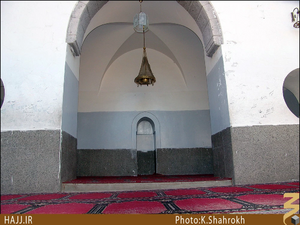
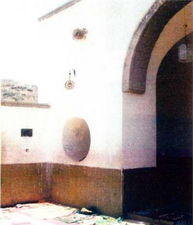
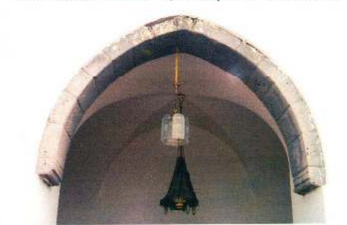
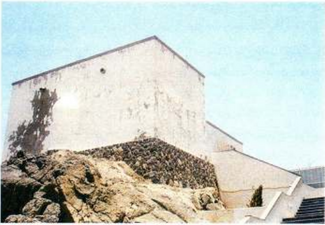
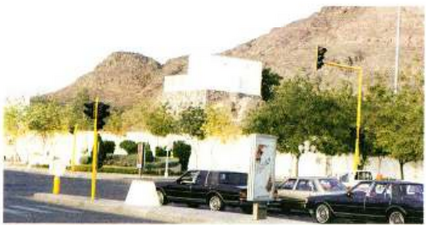
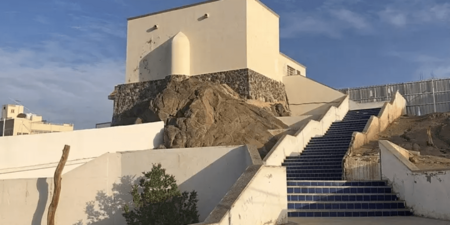
The | The mosque's first structure was built by [['Umar b. 'Abd al-'Aziz]] (governor of Medina between 87/706 – 93/711-12). It had a single portico with three columns.<ref>[https://wikihaj.com/index.php?title=file:مساجد_الاثریه.pdf&page=139 ''Al-Masājid al-atharīyya'', p. 139.]</ref> In 575/1179-80, the mosque was rebuilt by Husayn b. Abi al-Hayja', a vizier of the [[Fatimids of Egypt]], who also undertook expansions in al-Masjid al-Nabawi.<ref>''al-Tuḥfa al-Laṭīfa fī Tārīkh al-Madīna al-Sharīfa'', vol. 1, p. 297.</ref> The current structure of the mosque goes back to the renovation in 1270/1853.<ref>[https://wikihaj.com/index.php?title=file%3Aمرآة_الحرمین_ج۳-۴.pdf&page=696 ''Mawsūʿat mirʾāt al-Ḥaramayn al-sharīfayn wa Jazīrat al-ʿArab'', vol. 4, p. 696.]</ref> The mosque was restored again in 1411/1990-91, and further restoration after 1430/2009 gave the mosque its present appearance.<ref>[https://wikihaj.com/index.php?title=file:مساجد_الاثریه.pdf&page=140 ''Al-Masājid al-atharīyya'', p. 140.]; ''Maʿālim al-Madīna al-munawwara bayn al-ʿimāra wa-l-tārīkh'', part 4, vol. 4, pp. 94, 103.</ref> | ||
== Supplication of al-Fath Mosque == | == Supplication of al-Fath Mosque == | ||
This mosque has been regarded as one of the significant mosques for Muslims in the early centuries of Islam.<ref name=":2" /> A supplication has been narrated for visitors of the mosque, beginning with: “Lā ilāha illā Allāh al-'Aẓīm al-Ḥalīm...”<ref>[https://wikihaj.com/index.php?title= | This mosque has been regarded as one of the significant mosques for Muslims in the early centuries of Islam.<ref name=":2" /> A supplication has been narrated for visitors of the mosque, beginning with: “Lā ilāha illā Allāh al-'Aẓīm al-Ḥalīm...”<ref>[https://wikihaj.com/index.php?title=file%3Aمرآة_الحرمین_ج۳-۴.pdf&page=694 ''Mawsūʿat mirʾāt al-Ḥaramayn al-sharīfayn wa Jazīrat al-ʿArab'', vol. 4, p. 694.]</ref> In Shia sources, another supplication is reported, recommended to be recited in al-Fath Mosque after the [[Tahiyyat al-Masjid]] prayer: | ||
{{text and translation | {{text and translation | ||
| Line 53: | Line 53: | ||
| O Helper of the distressed, O Answerer of the prayer of the desperate, O Reliever of the sorrowful, remove from me my hardship, my anxiety, my distress, and my grief, just as You relieved Your Prophet (s) of his worry and protected him from the terror of his enemy. Protect me too from that which preoccupies me concerning this world and the Hereafter, O Most Merciful of the merciful. | | O Helper of the distressed, O Answerer of the prayer of the desperate, O Reliever of the sorrowful, remove from me my hardship, my anxiety, my distress, and my grief, just as You relieved Your Prophet (s) of his worry and protected him from the terror of his enemy. Protect me too from that which preoccupies me concerning this world and the Hereafter, O Most Merciful of the merciful. | ||
}} | }} | ||
== Gallery== | |||
=== Recent Pictures === | |||
<gallery mode="packed" heights="150px"> | |||
file:مسجد فتح 1.jpg|alt= | |||
file:مسجد فتح 2.webp|alt= | |||
file:مسجد فتح 3.webp|alt= | |||
file:مسجد فتح 4.webp|alt= | |||
</gallery> | |||
=== Old Pictures === | |||
<gallery mode="packed" heights="150px"> | |||
file:مسجد فتح 14.png|alt=|After the renovation in 1270/1853 | |||
file:مسجد فتح 9.jpg|alt= | |||
file:مسجد فتح 11.jpg|alt=| | |||
file:مسجد فتح 12.jpg|alt= | |||
file:مسجد فتح 5.webp|alt=|After the renovation in 1411/1991 | |||
file:مسجد فتح 6.png|alt= | |||
file:مسجد فتح 17.png|alt= | |||
file:مسجد فتح 15.png|alt= | |||
file:مسجد فتح 16.png|alt= | |||
file:مسجد فتح 10.png|alt= | |||
</gallery> | |||
==Notes== | ==Notes== | ||
| Line 59: | Line 83: | ||
==References== | ==References== | ||
{{ref}} | {{ref}} | ||
* | * ''Akhbār al-Madīna'', Muḥammad b. al-Ḥasan b. Zubāla, Medina: al-Mamlaka al-ʿArabiyya al-Saʿūdiyya, 1424/2003. | ||
* | * ''Al-Istiḏhkār'', Ibn ʿAbd al-Barr, Dār al-Kutub al-ʿIlmīyya, 2000. | ||
* | * ''Al-Madīna bayn al-māḍī wa-l-ḥāḍir'', al-Sayyid Ibrāhīm al-ʿAyyāshī, Madīna: Maktabat al-ʿilmīyya, 1972. | ||
* | * ''Al-Riḥla al-ʿAyāshiyya'', ʿAbd Allāh b. Muḥammad al-ʿAyyāshī, Abu Dabi: Dār al-Suwaydī, 2006. | ||
* ''Al-Tuḥfa al-laṭīfa fī tārīkh al-Madīna al-sharīfa'', Shams al-Dīn Sakhāwī, Beirut: Dār al-Kutub al-ʿIlmīyya, 1414/1993. | |||
* | * ''Biḥār al-anwār'', al-ʿAllāma al-Majlisī, Beirut: Dār Iḥyāʾ al-Turāth, 1403/1983. | ||
* | * ''Iʿlām al-warā bi-aʿlām al-hudā'', al-Shaykh al-Ṭabrisī, Qum: Āl al-Bayt, 1417/1996. | ||
* | * ''Maʿālim al-Madīna al-munawwara bayn al-ʿimāra wa-l-tārīkh'', ʿAbd al-ʿAzīz al-Kaʿkī, Medina: Muʾallif, 2011. | ||
* | * ''Al-Masājid al-atharīyya'', Muḥammad Ilyās ʿAbd al-Ghanī, Medina: Maṭābiʿ al-Rashīd bi-l-Madīna al-munawwara, second edition, 1419/1998. | ||
* | * ''Mawsūʿat mirʾāt al-Ḥaramayn al-sharīfayn wa Jazīrat al-ʿArab'', Ayyūb Ṣabrī Bāshā, Cairo: Dār al-Āfāq, 1424/2003. | ||
* | * ''Ṣaḥīḥ al-Bukhārī'', Bukhārī, Beirut: Dār al-Fikr, 1401/1981. | ||
* | * ''Tārīkh al-Madīna al-munawwara'', ʿUmar b. Shabba al-Namīrī, available online via WikiHaj. | ||
* ''Tārīkh maʿālim al-Madīna al-munawwara qadīman wa ḥadīthan'', Yāsīn Aḥmad al-Khayyārī, Riyāḍ, al-Mamlaka al-ʿArabiyya al-Saʿūdiyya, 1419/1998. | |||
* ''Waṣf al-Madīna al-munawwara'', ʿAlī b. Mūsā al-Afandī, Maṭbaʿat Nihḍat Miṣr. | |||
{{end}} | {{end}} | ||
Latest revision as of 11:59, 21 August 2025
 | |
| General Information | |
|---|---|
| Other Names | Al-Ahzāb Mosque, Al-A'lā Mosque |
| Place | Saudi Arabia, Medina, western slope of Mount Sela' |
| Usage | Mosque |
| Religious Aspect | |
| Religious Affiliation | Islam |
| Current State | |
| Status | Existing |
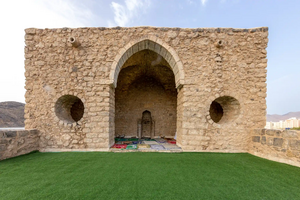
Al-Fath Mosque is one of the ancient mosques of Medina. The Prophet Muhammad (s) set up his command tent during the Battle of the Trench on a part of Mount Sela', which is the location of this mosque, situated to the northwest of al-Masjid al-Nabawi. In this place, the Prophet (s) prayed. The mosque has existed since the first/seventh century, and until the second/eighth and third/ninth centuries, the spot where the Prophet (s) prayed was marked with a pillar inside the mosque's courtyard.
Location
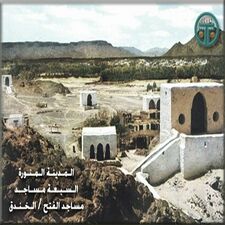
Al-Fath Mosque is situated on a section of the western slope of Mount Sela'.[1] Fath is the name of the area where the group of al-Fath Mosques is located. The most famous of these mosques, positioned at the highest part of the slope, is al-Fath Mosque.[2]
Origin and Names
The Prophet's command tent during the Battle of the Trench was located at the site of this mosque,[3] and thus it came to be known as al-Ahzāb Mosque. It was here that the Prophet prayed to God to defeat the “Ahzab.”[4][5] The Prophet prayed for three days, and on Wednesday, after the supplication was answered, signs of joy appeared on his face.[6] The spot where the Prophet (s) prayed was marked with a pillar in the mosque's courtyard during the second/eighth and third/ninth centuries.[7]
It is narrated that the Prophet (s) gave Muslims the glad tidings of victory at this place, hence it was called al-Fath Mosque. Others believe the mosque was named “Fath” because Sura al-Fath was revealed there.[8] The name “al-A'lā” has also been given to the mosque, referring to its elevated location on the slopes of Mount Sela'.[5]
Prophet's Prayer in al-Fath Mosque
The Prophet (s) performed the afternoon prayer in the area of al-Fath Mosque.[9] On one of the nights of the Battle of the Trench, the Prophet (s) stood on the hill where the mosque is located and asked for a volunteer to gather news from the enemy camp. Hudhayfa undertook the mission while the Prophet waited for his return.[10]
History of the Building
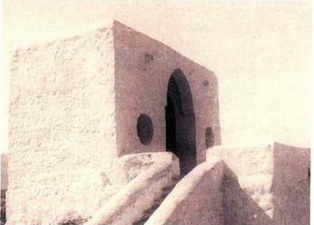
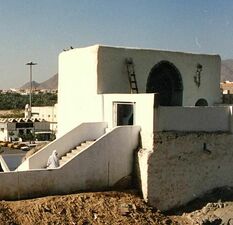
The mosque's first structure was built by 'Umar b. 'Abd al-'Aziz (governor of Medina between 87/706 – 93/711-12). It had a single portico with three columns.[11] In 575/1179-80, the mosque was rebuilt by Husayn b. Abi al-Hayja', a vizier of the Fatimids of Egypt, who also undertook expansions in al-Masjid al-Nabawi.[12] The current structure of the mosque goes back to the renovation in 1270/1853.[13] The mosque was restored again in 1411/1990-91, and further restoration after 1430/2009 gave the mosque its present appearance.[14]
Supplication of al-Fath Mosque
This mosque has been regarded as one of the significant mosques for Muslims in the early centuries of Islam.[9] A supplication has been narrated for visitors of the mosque, beginning with: “Lā ilāha illā Allāh al-'Aẓīm al-Ḥalīm...”[15] In Shia sources, another supplication is reported, recommended to be recited in al-Fath Mosque after the Tahiyyat al-Masjid prayer:
Supplication of al-Fath Mosque
| یا صَرِیخَ الْمَکْرُوبِینَ، وَیا مُجِیبَ دَعْوَةِ الْمُضْطَرِّینَ، وَیا مُغِیْثَ الْمَهْمُومِینَ، اِکْشِفْ عَنِّی ضُرِّی وَهَمِّی وَکَرْبِی وَغَمِّی، کَما کَشَفْتَ عَنْ نَبِیِّکَ صَلَّی اللهُ عَلَیْهِ وَآلِهِ هَمَّهُ، وَکَفَیْتَهُ هَوْلَ عَدُوِّهِ، وَاکْفِنِی ما اَهَمَّنِی مِنْ أَمْرِ الدُّنْیا وَالْاَخِرَةِ، یا أَرْحَمَ الرّاحِمِینَ. |
| O Helper of the distressed, O Answerer of the prayer of the desperate, O Reliever of the sorrowful, remove from me my hardship, my anxiety, my distress, and my grief, just as You relieved Your Prophet (s) of his worry and protected him from the terror of his enemy. Protect me too from that which preoccupies me concerning this world and the Hereafter, O Most Merciful of the merciful. |
| O Helper of the distressed, O Answerer of the prayer of the desperate, O Reliever of the sorrowful, remove from me my hardship, my anxiety, my distress, and my grief, just as You relieved Your Prophet (s) of his worry and protected him from the terror of his enemy. Protect me too from that which preoccupies me concerning this world and the Hereafter, O Most Merciful of the merciful. |
Gallery
Recent Pictures


Old Pictures
-
 After the renovation in 1270/1853
 -
-
-
-
 After the renovation in 1411/1991
 -
-
-
-
-


Notes
- ↑ Al-Masājid al-atharīyya, p. 138.
- ↑ Tārīkh maʿālim al-Madīna al-munawwara qadīman wa ḥadīthan, p. 199.
- ↑ Mawsūʿat mirʾāt al-Ḥaramayn al-sharīfayn wa Jazīrat al-ʿArab, vol. 4, p. 900.
- ↑ Ṣaḥīḥ al-Bukhārī, vol. 3, p. 234.
- ↑ 5.0 5.1 Al-Masājid al-atharīyya, p. 139.
- ↑ al-Istidhkār, vol. 2, p. 534.
- ↑ Tārīkh al-Madīna al-munawwara, p. 60.; Akhbār al-Madīna, p. 142.
- ↑ Maʿālim al-Madīna al-munawwara bayn al-ʿimāra wa-l-tārīkh, part 4, vol. 4, p. 84.
- ↑ 9.0 9.1 Tārīkh al-Madīna al-munawwara, p. 59.; Akhbār al-Madīna, b. Zubāla, p. 143.
- ↑ I'lām al-Warā bi-A'lām al-Hudā, vol. 1, p. 193.
- ↑ Al-Masājid al-atharīyya, p. 139.
- ↑ al-Tuḥfa al-Laṭīfa fī Tārīkh al-Madīna al-Sharīfa, vol. 1, p. 297.
- ↑ Mawsūʿat mirʾāt al-Ḥaramayn al-sharīfayn wa Jazīrat al-ʿArab, vol. 4, p. 696.
- ↑ Al-Masājid al-atharīyya, p. 140.; Maʿālim al-Madīna al-munawwara bayn al-ʿimāra wa-l-tārīkh, part 4, vol. 4, pp. 94, 103.
- ↑ Mawsūʿat mirʾāt al-Ḥaramayn al-sharīfayn wa Jazīrat al-ʿArab, vol. 4, p. 694.
References
- Akhbār al-Madīna, Muḥammad b. al-Ḥasan b. Zubāla, Medina: al-Mamlaka al-ʿArabiyya al-Saʿūdiyya, 1424/2003.
- Al-Istiḏhkār, Ibn ʿAbd al-Barr, Dār al-Kutub al-ʿIlmīyya, 2000.
- Al-Madīna bayn al-māḍī wa-l-ḥāḍir, al-Sayyid Ibrāhīm al-ʿAyyāshī, Madīna: Maktabat al-ʿilmīyya, 1972.
- Al-Riḥla al-ʿAyāshiyya, ʿAbd Allāh b. Muḥammad al-ʿAyyāshī, Abu Dabi: Dār al-Suwaydī, 2006.
- Al-Tuḥfa al-laṭīfa fī tārīkh al-Madīna al-sharīfa, Shams al-Dīn Sakhāwī, Beirut: Dār al-Kutub al-ʿIlmīyya, 1414/1993.
- Biḥār al-anwār, al-ʿAllāma al-Majlisī, Beirut: Dār Iḥyāʾ al-Turāth, 1403/1983.
- Iʿlām al-warā bi-aʿlām al-hudā, al-Shaykh al-Ṭabrisī, Qum: Āl al-Bayt, 1417/1996.
- Maʿālim al-Madīna al-munawwara bayn al-ʿimāra wa-l-tārīkh, ʿAbd al-ʿAzīz al-Kaʿkī, Medina: Muʾallif, 2011.
- Al-Masājid al-atharīyya, Muḥammad Ilyās ʿAbd al-Ghanī, Medina: Maṭābiʿ al-Rashīd bi-l-Madīna al-munawwara, second edition, 1419/1998.
- Mawsūʿat mirʾāt al-Ḥaramayn al-sharīfayn wa Jazīrat al-ʿArab, Ayyūb Ṣabrī Bāshā, Cairo: Dār al-Āfāq, 1424/2003.
- Ṣaḥīḥ al-Bukhārī, Bukhārī, Beirut: Dār al-Fikr, 1401/1981.
- Tārīkh al-Madīna al-munawwara, ʿUmar b. Shabba al-Namīrī, available online via WikiHaj.
- Tārīkh maʿālim al-Madīna al-munawwara qadīman wa ḥadīthan, Yāsīn Aḥmad al-Khayyārī, Riyāḍ, al-Mamlaka al-ʿArabiyya al-Saʿūdiyya, 1419/1998.
- Waṣf al-Madīna al-munawwara, ʿAlī b. Mūsā al-Afandī, Maṭbaʿat Nihḍat Miṣr.